
What if your Jeep's legendary 4x4 badge isn't enough to protect you from an unpredictable Buckeye State freeze? We all count on rugged Trail Rated capability to tackle deep snow, but sub-zero mornings and heavily salted rural highways bring harsh obstacles that four-wheel drive alone can't solve. When you're contending with sudden battery drain during an icy morning commute or watching corrosive brine attack your undercarriage, using the right Jeep maintenance tips Ohio winter travel requires is essential for keeping your vehicle running smoothly.
In this guide, you'll learn how to winterize your Jeep for freezing Central Ohio temperatures, lake-effect snow squalls, and corrosive road salt. We'll help you protect your resale value, maintain solid stopping power on slushy roads, and secure unfailing cold-weather reliability across Columbus and Madison County. From inspecting cold-cranking amps to safeguarding your frame against rust, here's your practical checklist to stay safe and confident all season long.
Key Takeaways
- Explore vital Jeep maintenance tips Ohio winter drivers need to overcome rapid freeze-thaw cycles, sub-zero cold, and heavy road salt treatments.
- Learn how checking your cold-cranking amps and testing antifreeze concentration protects critical engine components before freezing mornings hit.
- Discover the key differences between all-terrain and dedicated winter tires while learning how to shield your 4x4 drivetrain and underbody against corrosive road brine.
- Review essential exterior visibility upgrades, including heavy-duty winter wiper blades and sub-zero washer fluids designed to tackle persistent highway spray.
- Find out how scheduling a certified Mopar multi-point inspection can save you time, protect long-term resale value, and keep your vehicle fully road-ready.
Why Ohio Winters Demand Specialized Jeep Winter Maintenance
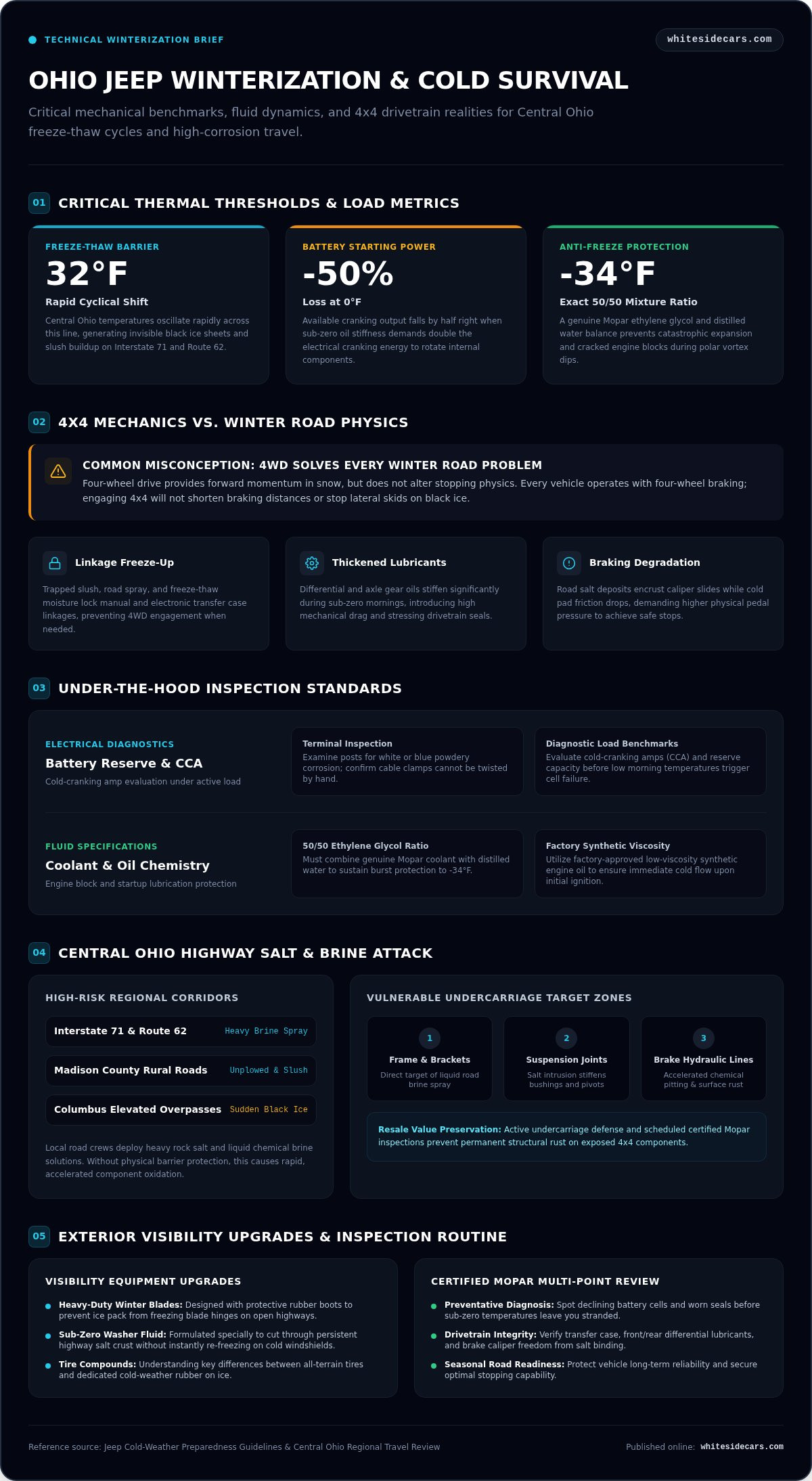
Midwestern winters test machinery like no other season. In Central Ohio, temperatures routinely swing above and below thirty-two degrees, creating rapid freeze-thaw cycles that produce hidden sheets of black ice and slush-choked pavement. For Jeep owners, these shifting patterns present unique mechanical challenges. Extreme cold thickens transmission fluids and gear oils, while sub-zero nights can drain a battery's starting capacity by half. Implementing targeted Jeep maintenance tips Ohio winter travel demands is the most reliable way to prevent stranded mornings and preserve your vehicle's mechanical health.
The Reality of Central Ohio Winter Road Conditions
Local highway travel shifts rapidly between quiet commutes and intense weather events. Driving along Interstate 71, Route 62, or open rural stretches through Madison County often means transitioning from sudden lake-effect squalls to invisible patches of black ice on elevated overpasses. To combat these hazards, road crews apply heavy doses of rock salt and liquid brine solutions. While necessary for clearing travel lanes, this relentless chemical spray coats undercarriage brackets, suspension joints, and brake lines. As research on severe winter road conditions shows, vehicle components subjected to constant salt exposure face accelerated oxidation without adequate physical barrier protection.
Four-Wheel Drive vs. Winter Preparedness
A common misconception across the Buckeye State is that four-wheel drive solves every cold-weather problem. While a capable 4x4 drivetrain provides outstanding forward traction in deep snow, it can't defy the laws of physics on sheer ice. Every vehicle on the road features four-wheel braking; engaging 4WD doesn't shorten stopping distances or prevent sideways skids on frozen curves.
Cold weather also introduces specific mechanical hurdles underneath the vehicle:
- Linkage freeze-up: Trapped slush and moisture can freeze manual or electronic transfer case linkages, locking you out of four-wheel drive precisely when you need it most.
- Thickened gear lubricants: Differential and axle fluids stiffen during sub-zero mornings, increasing internal drag and straining cold seals until fully warmed.
- Braking degradation: Salt-encrusted calipers and chilled brake pads require higher pedal effort to generate adequate stopping power.
Whether you're tackling unplowed county backroads or navigating busy Columbus rush hours, genuine peace of mind begins with mechanical readiness before severe storms arrive.
Essential Cold-Weather Under-the-Hood Jeep Checks
When Central Ohio morning temperatures dip below freezing, the components under your hood face immediate stress. Routine fluid levels that functioned fine during mild autumn afternoons can turn sluggish, brittle, or completely frozen without the right cold-weather ratings. Following proven Jeep maintenance tips Ohio winter conditions require means taking a systematic approach to what sits beneath your hood before the first polar vortex settles in.
Evaluating Battery Health and Cranking Amps
Few sounds are more frustrating than a slow, clicking starter on a January morning. Automotive batteries can lose roughly 50 percent of their starting power at zero degrees Fahrenheit, right when your engine needs double the energy to turn over stiff mechanical parts. Check your battery terminal posts for white or blue powdery corrosion, and make sure the cable clamps are snug enough that you can't twist them by hand.
To ensure total reliability, follow established safety benchmarks like the NHTSA winter driving tips and have your battery's reserve capacity and cold-cranking amps (CCA) evaluated under load. Scheduling a diagnostic test at a certified Mopar service center helps you spot a declining cell long before you're stranded in a cold driveway.
Coolant, Oil, and Vital Fluid Specifications
Engine longevity during freezing Midwestern months comes down to proper fluid chemistry. Using incorrect viscosities or worn fluids causes internal friction and premature component wear.
- Antifreeze concentration: Verify that your coolant maintains an exact 50/50 mixture of genuine Mopar ethylene glycol and distilled water. This specific balance delivers freeze protection down to minus 34 degrees Fahrenheit and keeps your engine block safe from catastrophic cracking.
- Winter-grade engine oil: Switch to your vehicle's factory-approved low-viscosity synthetic motor oil (such as 0W-20). Lighter base weights circulate rapidly on sub-zero starts, shielding sensitive camshafts and lifters within the critical first seconds of ignition.
- Hydraulic and brake fluids: Moisture settles naturally into brake lines and power steering circuits over time. When ambient temperatures plunge, that water can freeze into slushy ice crystals, causing stiff steering effort or spongy brake pedal response.
- Belts and cooling hoses: Inspect rubber serpentine belts and radiator hoses for microscopic stress cracks or cold-induced stiffness that can lead to sudden belt snap on the highway.
If you'd like a helping hand verifying these vital cold-weather tolerances, the friendly team at Tom Whiteside Chrysler Dodge Jeep Ram is always ready to ensure your vehicle is running at peak winter performance.
Drivetrain, Undercarriage, and Traction Defense for Ohio Roads
A Jeep is renowned for trail durability, but Midwestern winters test the underside of your vehicle just as aggressively as rocky trails. From fluctuating tire pressure to salty slush clinging to raw steel, comprehensive Jeep maintenance tips Ohio winter travel requires extending attention directly to your chassis and running gear. Check your tire pressure weekly, as cold air naturally contracts, causing tires to lose roughly one PSI for every ten-degree drop in outside temperature.
Selecting the Right Winter Rubber for Your Jeep
Standard all-terrain rubber often hardens once ambient temperatures drop below 45 degrees Fahrenheit, noticeably reducing grip on cold asphalt. In contrast, tires bearing the three-peak mountain snowflake (3PMSF) symbol utilize specialized rubber compounds that stay pliable in freezing conditions. Their microscopic tread sipes create thousands of biting edges to grip packed snow and ice. To test your remaining tread, place a quarter upside down into a tire groove; if the top of George Washington's head is exposed, your tread is under 4/32 inch and won't safely channel heavy slush.
Transfer Case and Differential Maintenance
Your four-wheel drive system relies on clean, moisture-free lubricants to engage smoothly. Autumn off-roading or deep puddle crossings can draw trace moisture past axle seals into differential housings. When sub-zero weather hits, that trapped water freezes into ice crystals, starving ring and pinion gears of proper lubrication and accelerating bearing wear. Fresh transfer case and gear fluids ensure seamless 4x4 engagement on icy mornings. If you're exploring the pre-owned market, take a moment to review our used Jeep buyer guide for practical advice on evaluating running gear and drivetrain condition.
Defending the Frame Against Ohio Road Brine
Liquid brine clings to every hidden crevice beneath your vehicle. Boxed frame sections, transfer case skid plates, and steel brake line brackets are common collection points for caustic road salt. Scheduling regular high-pressure undercarriage washes after major snowstorms flushes out corrosive deposits before oxidation takes hold; taking advantage of full-service cleaning and seasonal detailing from Nanak Car Wash helps keep vulnerable chassis components free of chemical buildup. For extra protection, consider applying an oil- or lanolin-based corrosion barrier that penetrates factory seams and guards against metal degradation without damaging factory e-coatings.
Exterior Visibility and Emergency Preparedness Checklist
Blinding semi-truck road spray and sudden whiteout squalls can erase forward visibility in seconds. When heavy slush coats your windshield, your safety relies entirely on clear sightlines and reliable cabin heat. Keeping your glass crystal clear and preparing for unexpected roadside delays are cornerstone Jeep maintenance tips Ohio winter drivers shouldn't overlook.
Optimizing Windshield Visibility and Defroster Operation
Traditional wiper frames feature exposed metal hinges that quickly pack with wet snow, lifting the rubber blade off your windshield. Switching to heavy-duty, beam-style winter blades provides continuous spring tension across the curved glass, wiping away thick highway grime without streaking. Treat your windshield glass with an exterior water-repellent coating to help sleet bead up and slide off easily. It is equally important to repair minor chips promptly, as sudden cabin heat can cause glass stress fractures to expand rapidly; if your winter road trips take you south through areas like Kentucky or Florida, discover Pinnacle Auto Glass for specialized windshield repair and replacement.
Never rely on leftover summer washer fluid. Warm-weather washer formulas freeze inside spray nozzles and split plastic washer lines during hard freezes. Purge your reservoir and refill it with a dedicated sub-zero washer solvent rated down to minus 20 or minus 30 degrees Fahrenheit.
Inside the cabin, make sure your climate control system is firing on all cylinders. Test your defroster functions early: verify that the blower motor operates across all fan speeds and that the heater core delivers rapid, uniform warmth to both sides of the dashboard. Replacing a clogged cabin air filter before winter also maximizes defroster airflow, eliminating stubborn interior fogging before you pull out of your driveway.
Venturing across rural roads during an unexpected storm requires self-reliance. If you slide into a snow-filled ditch along a dark county route, a properly equipped cargo area turns a stressful delay into a safe, manageable situation. Build an emergency kit with these trail-proven essentials:
- Warmth and lighting: Heavy wool blankets, thermal gloves, water-resistant flashlights with extra batteries, and reflective roadside flares.
- Recovery and traction tools: A compact folding snow shovel, kinetic recovery tow straps, traction boards, and a bag of coarse sand or kitty litter for wheel slip.
- Starting power: A standalone lithium-ion jump-pack so you aren't dependent on another vehicle for a cold jump.
Make it a rule to keep your fuel tank at least half full all winter. This simple habit prevents moisture condensation inside the fuel system and guarantees hours of safe cabin heat if traffic stalls. To equip your vehicle with genuine wiper blades and winter accessories, contact the parts team at Tom Whiteside CDJR today.
Schedule Certified Mopar Winter Service at Tom Whiteside CDJR
Winter prep doesn't have to turn into a freezing Saturday chore in your driveway. While basic tire and wiper checks are great habits at home, leaving comprehensive seasonal care to the professionals delivers total peace of mind. Factory-certified Mopar technicians understand the intricacies of every Wrangler, Grand Cherokee, and Gladiator system inside out. Utilizing genuine OEM Mopar replacement parts and factory-approved winter fluids safeguards your vehicle's warranty, extends mechanical longevity, and ensures dependable performance on sub-zero mornings.
Why Central Ohio Drivers Choose Tom Whiteside CDJR
Central Ohio roads present unique driving demands, and independent repair shops often lack the dedicated diagnostic software or model-specific tooling needed for modern 4x4 systems. Located right along Route 62 in Mount Sterling, Tom Whiteside CDJR provides a welcoming, community-focused alternative for drivers traveling in from Columbus, Grove City, London, and Circleville. Here, neighborly hospitality balances with specialized factory training. Whether you're commuting across urban highways or venturing onto snow-covered rural routes, our service specialists treat your vehicle with genuine care. Discover why so many regional owners make the short drive by exploring our dealership near Columbus guide.
Simple Steps to Book Your Winter Readiness Inspection
Setting up your cold-weather service takes only a couple of minutes. Whether you prefer using our intuitive online scheduling tool or calling our service desk to speak with a friendly advisor, securing an appointment before winter storms roll in is simple and stress-free.
During a seasonal multi-point inspection, our certified technicians perform a detailed health assessment of your Jeep, including:
- Electrical evaluation: Computerized load-testing of battery cold-cranking amps and charging system output.
- Thermal systems check: Hydrometer verification of engine coolant freezing thresholds and cabin heater core airflow.
- Running gear inspection: Fluid assessments for front and rear differentials, transfer case seals, and steering linkages.
- Brake and undercarriage review: Measuring brake pad friction material, inspecting hydraulic lines, and checking chassis points for rust defense.
Putting these essential Jeep maintenance tips Ohio winter commutes demand into practice keeps you prepared for whatever the forecast holds. Don't wait for sub-zero temperatures to uncover a mechanical weakness. Schedule your certified Jeep winter inspection at Tom Whiteside CDJR and head into the freezing months with complete confidence.
Drive Confidently Across Central Ohio This Winter
Staying ahead of severe Buckeye State freezes comes down to timely, focused preparation. Testing your battery's cranking capacity before sub-zero mornings arrive, shielding your undercarriage against caustic road brine, and ensuring your four-wheel drive fluids are fresh keep your vehicle trail-ready all season long. Following these practical Jeep maintenance tips Ohio winter travel requires ensures you won't get caught off guard by sudden lake-effect snow squalls or icy rural backroads.
You don't have to tackle winter readiness alone. Our factory-trained certified Mopar technicians use genuine OEM Mopar parts and engineered fluids to deliver complete cold-weather confidence. Proudly serving Mount Sterling, Columbus, and Madison County drivers, our team treats you like a neighbor every step of the way. Keep your Jeep reliable this winter with certified Mopar service at Tom Whiteside CDJR, and embrace the road ahead with genuine peace of mind.
Frequently Asked Questions
Do I really need winter tires on my Jeep if it has four-wheel drive?
Yes, dedicated winter tires make a major safety difference even on capable 4x4 models. Four-wheel drive helps you accelerate through snow, but it does not assist with steering grip or stopping distance on slick pavement. Winter tires feature specialized flexible rubber compounds and dense siping patterns that remain pliable below 45 degrees, providing essential braking traction on icy Central Ohio roads where all-season rubber hardens.
Why does my Jeep tire pressure warning light come on during cold Ohio mornings?
Cold ambient air causes the air molecules inside your tires to contract, reducing overall tire pressure by roughly one PSI for every ten-degree drop in outside temperature. When an overnight freeze hits Grove City or Circleville, that sudden pressure drop triggers the dashboard monitoring sensor. Check and inflate your tires to the door-jamb specification once the tires are cold to keep your tread wearing evenly.
What cold-cranking amperage should my Jeep battery have for freezing winters?
Most modern Jeep models require a battery rated between 650 and 800 cold-cranking amps (CCA) to reliably start in sub-zero Midwestern weather. Freezing temperatures slow the internal chemical reactions that produce electrical power, while engine oil thickens and requires extra torque to turn over. Following essential Jeep maintenance tips Ohio winter driving demands includes getting a professional battery conductance test before December freezes arrive.
How often should I wash my Jeep undercarriage during the Ohio winter?
You should wash your Jeep undercarriage every one to two weeks, especially right after major snow events when road crews apply heavy salt or liquid brine. Spraying the chassis with high-pressure fresh water flushes out corrosive chemical residue from boxed frame sections, suspension mounts, and brake lines. Regular cleaning prevents rust from settling into exposed steel components and preserves your vehicle's resale value.
Can cold weather cause my Jeep transfer case to shift stiffly?
Yes, frigid temperatures cause transfer case and differential fluids to thicken significantly, which naturally creates higher mechanical resistance when shifting between drive modes. Road slush packed around manual linkage pivots can also freeze solid overnight, making the shift lever feel stubborn. If stiff shifting persists after your drivetrain reaches operating temperature, your transfer case lubricant may be contaminated with moisture and due for service.
What type of windshield washer fluid is best for sub-zero temperatures?
You should always use a dedicated winter washer solvent rated down to minus 20 or minus 30 degrees Fahrenheit. Standard summer washer fluid is largely water and will freeze solid inside the reservoir, pump lines, and spray nozzles during a freezing morning in Columbus or London. Quality sub-zero formulas contain alcohol compounds that cut through salty highway mist and prevent instant windshield refreezing.
Should I switch engine oil viscosity when winterizing my Jeep in Ohio?
Always stick with the manufacturer-recommended oil weight listed in your owner's manual or oil cap, which is typically a low-viscosity synthetic like 0W-20. Modern engines rely on tight tolerances that require immediate lubrication at startup. Adopting certified Jeep maintenance tips Ohio winter commutes demand means using genuine Mopar synthetic oil, which flows instantly on freezing starts to protect vital valvetrain components from excessive wear.


