
What if your trade-in could lower the cost of your next vehicle before you settle on the final numbers? If you’re researching how to trade in a vehicle Ohio, one important factor is the sales tax credit: in a qualifying dealership transaction, the trade-in value is deducted from the vehicle’s purchase price before sales tax is calculated. You’re right to want a fair offer, clear title paperwork, and a process that doesn’t take over your week.
This guide walks you through the Ohio trade-in process, from preparing your documents and checking your vehicle’s market value to understanding the sales tax credit and completing the title transfer. You’ll also learn how to compare an offer with confidence, so convenience doesn’t mean settling for less. At Tom Whiteside Chrysler Dodge Jeep Ram in Mount Sterling, a KBB Instant Cash Offer can give you a useful valuation benchmark. Maintenance records from the Mopar service team may also help document your vehicle’s care. Whether you’re moving into a RAM, a Jeep, or another vehicle, these steps can help you plan your trade with fewer surprises.
Key Takeaways
- Learn how to trade in a vehicle Ohio by following the process from valuation and inspection through the offer and paperwork.
- Prepare your title, identification, registration, and any loan details to help prevent paperwork delays.
- Find out how vehicle condition, a sensible clean-up, and organized service records can support a clear appraisal.
- Understand how Ohio’s trade-in sales tax credit can affect the taxable purchase price compared with selling privately.
- Know what to consider when choosing a Mount Sterling dealership for a convenient, well-documented trade-in.
How to Trade In a Vehicle Ohio: Understanding the Process
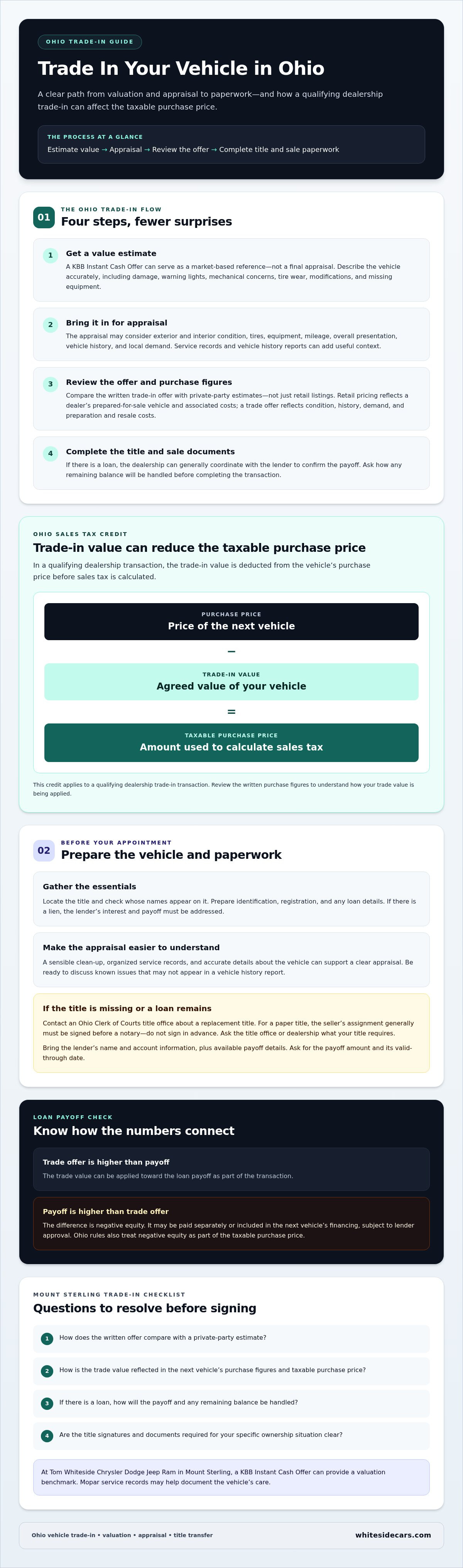
Trading in can be a practical alternative to a private sale for central Ohio drivers who want to avoid creating an ad, arranging test drives, negotiating with multiple buyers, and handling payment and title paperwork on their own. A dealership trade-in combines the sale of your current vehicle with the purchase of another, a transaction also known as part exchange. The process typically follows a few clear steps: get a value estimate, bring the vehicle in for an appraisal, review the offer, then complete the paperwork.
Keep trade-in value separate from retail value. Retail pricing reflects what a dealer may ask a buyer for a vehicle after preparing it for sale and accounting for associated costs. A trade-in offer reflects the vehicle’s condition, history, demand, and the dealership’s costs to prepare and resell it. Compare an offer with private-party estimates, not just retail listings, for a more realistic reference point.
Step 1: Get an Accurate Valuation
Start with a KBB Instant Cash Offer to get a useful market-based reference before discussing your vehicle with a dealership. Describe its condition accurately, including visible damage, warning lights, mechanical concerns, tire wear, modifications, and missing equipment. Complete information helps reduce the chance that an online estimate changes after an in-person review.
An online valuation is a starting point, not a final appraisal. It depends on the information you enter and may not capture every feature or issue. An in-person appraisal lets the dealership verify the vehicle’s condition and consider current local demand.
Step 2: The Professional Appraisal
At a Mount Sterling dealership, an appraiser may review the vehicle’s exterior, interior, tires, visible condition, and equipment, then consider its mileage and overall presentation. A vehicle history report, such as Carfax or AutoCheck, can add context about reported accidents, ownership, and service history. Be ready to discuss anything you know that may not appear in the report.
Local demand also matters. Interest in a particular vehicle type, its condition, and how readily similar vehicles are selling around Columbus can influence an offer. A Jeep or RAM may appeal to a different set of buyers than a sedan, but demand can shift, so no single online estimate tells the whole story.
After the appraisal, review the written offer alongside the purchase figures for your next vehicle. If you still owe money, the dealership can generally coordinate with your lender to obtain the payoff and apply the trade value toward it. Ask how any remaining loan balance will be handled. If the payoff is higher than the trade offer, you may need to account for the difference. The final step is completing the title and sale documents. Understanding each stage is central to how to trade in a vehicle Ohio with fewer surprises.
Essential Paperwork and Legal Requirements for Ohio Trade-Ins
Getting the paperwork ready before your appraisal can help keep a trade-in moving smoothly. If you’re learning how to trade in a vehicle Ohio, start by locating the title and checking whose names appear on it. A clear title makes it easier to confirm who must sign. If there’s a lien, the lender still has a financial interest in the vehicle, so the payoff must be addressed as part of the transaction.
Navigating Title Transfers in Ohio
Ohio title transfers are handled through a county Clerk of Courts title office. For a paper title, the seller’s assignment generally must be signed before a notary. Don’t sign in advance. Ask the title office or dealership what signatures and documents your specific title requires. A dealership may use a limited power of attorney for agreed title-related tasks, but review the form carefully so you understand what authority you’re granting.
Lost the original title? Contact an Ohio Clerk of Courts title office about applying for a replacement before your trade-in appointment. Processing steps can depend on the title and ownership details, so check with the office rather than assuming a registration card can take the title’s place.
The Role of the Lienholder
If you’re still making payments, bring your lender’s name and account information, along with any available payoff details. The dealership can coordinate with the lienholder to confirm the current payoff and explain how it will be handled in the transaction. Ask for the payoff amount and its valid-through date, since loan balances can change as interest accrues.
If the payoff exceeds the trade-in offer, the difference is negative equity. It may be paid separately or included in the next vehicle’s financing, subject to lender approval. Ohio’s rules also treat negative equity as part of the taxable purchase price. Review the Ohio sales tax law and ask for the figures to be shown clearly in your paperwork. A dealership transaction can simplify coordination compared with arranging a private sale while a lender holds the title, but it doesn’t erase any balance you owe.
Before you head to a dealership in Mount Sterling, gather your government-issued photo ID, current registration, title if you have it, and loan payoff information if applicable. Bring every key and remote, plus the owner’s manual if available. For model-year 2011 or newer vehicles, an odometer disclosure is required and is typically handled with the title documents. Having these items ready can help the dealership complete the transaction accurately.
Still unsure what to bring? You can raise your trade-in paperwork questions with the team at Tom Whiteside Chrysler Dodge Jeep Ram before you make the trip.
Maximize Your Car's Trade-In Value in Columbus
A clean, well-documented vehicle is easier to assess, but preparation doesn’t mean spending heavily before an appraisal. A quick wash removes everyday dust. Professional detailing may make sense if the interior has stubborn stains or odors, but there’s no guarantee the added expense will be reflected in the offer. Start with affordable fixes and clear records that help an appraiser understand how you’ve cared for the vehicle.
Preparation and Detailing Tips
Pay attention to details buyers notice: remove trash, clean floor mats, address lingering odors, and wipe fingerprints from tech screens. Remove personal information from the infotainment system, including paired phones, saved addresses, and contacts. Use the owner’s manual for model-specific steps. A tidy engine bay can signal attentive upkeep, but don’t hide leaks or other issues with a quick clean.
Small visible problems, such as a burned-out bulb or loose trim, may be worth addressing if the repair is simple and inexpensive. For larger issues, ask whether repairing them is likely to affect the appraisal before authorizing work. The goal is to present the vehicle honestly, not to invest in repairs that may not improve its trade-in value.
Documentation, Maintenance, and Timing
Bring receipts or service records that show routine maintenance and major repairs. A documented history of oil changes, whether performed in Mount Sterling or elsewhere, gives the appraiser useful context. Records for recent brakes, tires, or battery work can also clarify the vehicle’s condition. For a RAM or Jeep, organized Mopar service records can help document maintenance, though records don’t guarantee a higher offer.
There’s no reliable calendar shortcut for timing a trade. Seasonal interest may influence demand for vehicles such as Jeep Wranglers and RAM trucks, but the effect depends on current local inventory, condition, and what Columbus-area buyers are seeking. Ask how those factors were considered in your appraisal rather than counting on a particular month to bring a premium. For more preparation ideas, see our guide to maximizing trade-in value.
Keep the trade appraisal distinct from the tax calculation on your next vehicle. Ohio’s rules for purchase taxation, including how a trade-in and negative equity may affect the calculation, are explained in the Ohio Administrative Code on vehicle sales tax. If you’re preparing to trade in Mount Sterling, these steps can help you discuss your vehicle’s condition and supporting records with confidence as you learn how to trade in a vehicle Ohio.
The Ohio Sales Tax Credit: Saving Money on Your Next Purchase
Ohio’s trade-in credit can make a dealership trade worth more overall than the offer alone suggests. When you trade a vehicle toward another vehicle in the same transaction, the trade allowance is generally subtracted from the purchase price before sales tax is calculated. It isn’t a cash rebate; it reduces the amount subject to tax. A private sale may bring a different price, but it doesn’t qualify as a trade-in credit on a separate vehicle purchase.
How the Tax Credit Changes the Math
Use this simple formula to estimate the benefit:
- Taxable purchase amount: purchase price minus eligible trade-in allowance.
- Estimated tax savings: trade-in allowance multiplied by your applicable sales tax rate.
For example, on a RAM purchase, calculate tax on the purchase price after subtracting the trade allowance, then compare it with tax on the full purchase price without a trade. The difference is the tax saved through the credit. Your actual figures depend on the transaction and applicable local rate, so check the itemized numbers rather than relying on a rough estimate. The credit can increase your trade’s effective value by the tax you avoid paying, even though it doesn’t change the stated offer.
The trade and purchase need to be part of the same transaction to receive this treatment. Selling privately first and using the proceeds later toward a vehicle purchase generally doesn’t qualify. If you have negative equity, meaning your loan payoff exceeds the trade allowance, that difference can affect the taxable calculation. Review the transaction details carefully before signing.
Local Rates and Your Buyer’s Order
Ohio’s state sales tax rate is 5.75%, with local taxes affecting the combined rate. The buyer’s county of residence determines the applicable rate, not the dealership’s location. For instance, the verified combined rate in Franklin County is 7.5%; rates in Madison and Pickaway counties differ, so confirm the current figure for your residence before estimating savings.
Your buyer’s order is the key document to review. It should show the vehicle’s purchase price, trade allowance, taxable amount, and calculated tax. Check that the trade is recorded in the same transaction and that any loan payoff or negative equity is accounted for clearly. If anything is unclear, ask for an explanation before completing the paperwork.
As you learn how to trade in a vehicle Ohio, include the tax effect when comparing a dealer offer with a private-sale estimate. To review your trade-in options and see how the figures apply to your next vehicle, explore a trade-in with Tom Whiteside Chrysler Dodge Jeep Ram in Mount Sterling.
Why Trade In Your Vehicle at Tom Whiteside CDJR?
A vehicle change should feel like a confident next step, not a drawn-out negotiation. Tom Whiteside Chrysler Dodge Jeep Ram brings vehicle sales and service together at its Mount Sterling dealership, serving central Ohio communities including Columbus, Grove City, Dublin, Groveport, Hilliard, Canal Winchester, Ashville, Orient, Circleville, Chillicothe, London, Washington Court House, and Delaware. Whether you’re ready for a new Jeep or RAM or still comparing your options, the team can help you understand the trade-in process and consider what comes next.
Local Expertise and a Transparent Valuation
A fair offer starts with a clear look at your vehicle. Tom Whiteside Chrysler Dodge Jeep Ram offers the KBB Instant Cash Offer as a valuation reference, giving you a useful starting point for a conversation about your car, truck, or SUV. The final appraisal can account for its condition and other relevant details. Ask how those factors shape the offer, then take time to review the figures.
For Jeep and RAM owners, working with a dealership that sells these vehicles can make the next step feel more familiar. The team can help you explore a move from your current vehicle to a new Jeep or discuss a RAM alongside other available vehicle options. Your priorities are personal, so make sure the conversation gives you room to ask questions and compare choices.
Tom Whiteside Chrysler Dodge Jeep Ram’s local approach is centered on helping drivers from the surrounding communities. For drivers around Columbus, including Grove City and London, Mount Sterling offers a local point of contact for exploring a trade and your next vehicle. Hilliard-area drivers can also contact the dealership to discuss their options and plan a visit.
Start from Home, Then Plan Your Visit
You can begin with the online KBB Instant Cash Offer tool from home. Enter your vehicle information and describe its condition accurately to receive an initial valuation reference. If you’d like to move forward, contact the Mount Sterling team to discuss an in-person appraisal and what to bring. The online estimate is a starting point; the appraisal helps assess the actual vehicle.
If you’re ready to take the first step in how to trade in a vehicle Ohio, get your KBB Instant Cash Offer today. Use it to begin an informed conversation, then decide whether trading toward a Jeep, RAM, or another vehicle is the right fit for you.
Take Your Next Trade-In Step with Confidence
A smoother trade-in starts with an accurate valuation, complete title and loan information, and a careful review of the final purchase figures. In Ohio, the trade-in sales tax credit can also affect the overall value of your deal when the trade and purchase happen in the same transaction. Keep your service records and describe your vehicle honestly to help make the appraisal clear.
Now you know how to trade in a vehicle Ohio and what to consider before accepting an offer. Tom Whiteside CDJR in Mount Sterling offers a KBB Instant Cash Offer and a local place to discuss your options. Whether you’re considering a new Jeep, RAM, or another vehicle, take time to review the offer and purchase figures before deciding.
Value your trade and browse our new inventory in Mount Sterling. Start with a valuation, then contact the team to discuss your next steps.
Frequently Asked Questions
Do I need to have my Ohio title notarized before I come to the dealership?
No, you generally don’t need to have the title notarized before arriving, but the required title signatures must be completed according to Ohio rules. For a paper title, the seller’s assignment typically needs to be signed before a notary. Don’t sign it ahead of time; ask the dealership what to bring and where to complete the notarization. Tom Whiteside CDJR is based in Mount Sterling and serves drivers from Columbus, Grove City, Dublin, Groveport, Hilliard, Canal Winchester, Ashville, Orient, Circleville, Chillicothe, London, Washington Court House, and Delaware.
Can I trade in a vehicle if I still owe money on the loan?
Yes, you can usually trade in a vehicle with an active loan. Bring your lender’s name and account information so the dealership can help confirm the payoff and explain how it fits into the transaction. If the trade-in offer is higher than the payoff, the remaining amount may contribute toward your next purchase. If you owe more than the vehicle’s trade value, you’re responsible for the difference. It may be handled separately or included in new financing, subject to lender approval.
How exactly does the Ohio sales tax credit work for vehicle trades?
Ohio generally calculates sales tax on the vehicle’s purchase price after subtracting an eligible trade-in allowance when the trade and purchase are part of the same transaction. The applicable rate depends on the buyer’s county of residence. A private sale followed by a separate purchase doesn’t receive this trade-in credit. If there’s negative equity, it can affect the taxable amount. Review the buyer’s order to see the purchase price, trade allowance, taxable amount, and tax calculation.
What should I bring with me to the dealership on the day of the trade?
Bring your vehicle title if you own it outright, a valid government-issued photo ID, current registration, and loan payoff information if you still owe money. Gather all keys and remotes, plus the owner’s manual and service records if available. The title is essential for confirming ownership and completing the transfer. For model-year 2011 or newer vehicles, an odometer disclosure is required and is typically handled as part of the title process.
Is it better to trade in my car or sell it privately in Ohio?
It depends on what matters most to you. A private sale may bring a different offer, but you’ll handle advertising, inquiries, test drives, payment, and title paperwork yourself. A dealership trade can bring those steps together with your next vehicle purchase, and a qualifying same-transaction trade may reduce the amount subject to Ohio sales tax. Compare the complete private-sale proceeds with the trade offer and tax effect, not just the headline prices.
Can I trade in more than one vehicle toward a single new purchase?
You can ask a dealership to appraise multiple vehicles as part of a purchase discussion. Before proceeding, confirm that the dealership can include each vehicle in the transaction and ask how the allowances will appear on the buyer’s order. Ohio’s tax treatment depends on the details of the transaction, so don’t assume every vehicle or arrangement will qualify in the same way. Review the itemized figures and ask questions before signing.
What happens to my old license plates after the trade-in?
Remove your plates from the vehicle before handing it over. In Ohio, plates generally stay with the vehicle owner rather than transferring to its next owner. You may be able to transfer eligible plates to another vehicle registered to you, but check current Ohio BMV instructions for the applicable steps and requirements. Don’t leave plates or personal registration documents in the traded vehicle, and ask the dealership if you have questions about the handoff.
Does the condition of my tires affect my trade-in offer?
Yes, tire condition can factor into an appraisal. The appraiser may consider tread wear, uneven wear, visible damage, and whether the tires appear to need replacement soon. If you recently bought tires, bring the receipt so the work can be documented. You don’t necessarily need to replace worn tires before an appraisal; ask how their condition was considered and compare the potential repair cost with any expected effect on the offer.


