
The truck with the lowest monthly payment isn’t always the best fit. A ram lease may suit drivers who want to change vehicles after a set term, while buying may make more sense if you plan to keep your truck for years or drive without a lease mileage limit. The right choice depends on more than the payment: your typical mileage, work demands, and plans for the truck all matter.
Questions about mileage allowances, wear standards, and what happens when a lease ends are worth sorting out before you sign. This guide explains how leasing differs from buying, which terms to weigh for personal or work driving, and how to look at the full commitment instead of focusing on one number. Your driving habits and long-term ownership plans can help narrow the choice. At Tom Whiteside Chrysler Dodge Jeep Ram in Mount Sterling, the finance team offers personalized lease and loan options as you compare new RAM trucks. Use the steps below to prepare for a conversation about terms that fit your plans.
Key Takeaways
- Decide whether a ram lease fits your plans by considering how consistently you drive and whether you want to own your truck long term.
- Review how the lease term, vehicle value, mileage allowance, and other agreement details shape payments and end-of-lease responsibilities.
- Compare leasing and buying across ownership, mileage flexibility, customization, and what happens when your agreement ends.
- Estimate your commuting, weekend, and work driving before reviewing written lease terms, especially if your mileage may change.
- Bring your truck-use preferences and expected mileage to Tom Whiteside’s finance team to discuss personalized lease and loan options.
Is a RAM Lease Right for Your Driving and Ownership Plans?
Leasing gives you the right to use a RAM truck for a contract term; buying is a path toward owning it. That distinction affects more than what happens at the end. A lease comes with agreed conditions, while a buyer who finances a purchase makes payments toward ownership. Neither option is automatically less expensive. Compare the full agreement with your longer-term plans, not just the monthly payment.
A Vehicle leasing overview can explain the basic arrangement, but your individual contract sets the actual payment, obligations, and end-of-term choices. Consider whether your driving is consistent enough to plan around the agreement or likely to change because of a new job, family needs, or work demands. Predictable driving can make it easier to estimate mileage. If your routine may change, pay close attention to flexibility and contract limits.
What does leasing a RAM truck mean?
The lessee is the person who signs the lease and uses the truck. The leasing company retains ownership during the contract term, which is the agreed period of use. At the end, choices depend on the contract and may include returning the truck or buying it under the agreement’s terms. Payments and responsibilities also vary, so don’t assume two leases have identical conditions.
With a financed purchase, payments go toward buying the vehicle; once the loan is paid, you own it. A lease payment reflects the terms of that lease, not a guaranteed saving over financing. Review the full commitment, including mileage allowance, vehicle-condition expectations, and end-of-term choices.
Who may prefer leasing, and who may prefer buying?
Leasing may suit drivers who like changing vehicles periodically and can plan their use around contract limits. Buying may be a better fit if you expect to keep a truck for years, want ownership, or regularly drive high mileage. Consider your routine around Mount Sterling and central Ohio rather than relying on general assumptions about what a truck lease is for.
Assess work use as carefully as personal driving. If you tow, haul equipment, or rely on a truck for changing job needs, consider how often those tasks happen and what they require from the vehicle. Don’t assume a lease automatically suits or rules out work use; both the agreement and your intended use matter.
Before comparing options, sketch out a typical month and note what could change. Include:
- Regular commuting and other routine trips.
- Weekend travel and occasional longer drives.
- Work-related driving, towing, or hauling you expect to do.
- Likely mileage changes over the contract term.
Then weigh those patterns against your ownership goal. If the truck’s role is predictable and you prefer to change vehicles at intervals, a lease may be worth exploring. If you want to keep your RAM long term or need room for frequent, unpredictable driving, compare buying carefully. Tom Whiteside Chrysler Dodge Jeep Ram’s finance team offers personalized lease and loan options, giving you a local resource to discuss how your driving plans align with each path.
How RAM Lease Payments and Contract Terms Work
A lease payment depends on the details of a specific agreement, not just the truck’s advertised price. Vehicle configuration, agreed value, contract term, down payment, and other contract factors can all influence the amount. The monthly figure is only one part of the commitment. Review what you’ll pay over the full term and what responsibilities apply when you return the truck.
Promotional offers, when available, may apply only to particular vehicles or customers and may include specific conditions. Treat an advertised payment as a starting point for reviewing written terms, not as a figure that automatically applies to every shopper. A personalized ram lease discussion can help you understand how an agreement fits your situation.
Which factors can affect a RAM lease payment?
The truck’s configuration and agreed value help establish the starting point. The length of the term, any down payment, and other details in the contract also affect the payment structure. Credit approval and lender terms can influence an individual offer, so a promotion’s terms may not match every customer’s agreement.
As you compare options, look beyond the monthly amount. Consider the total due under the agreement, the term, and any amounts due at signing. A larger down payment may lower the monthly figure, but it also means paying more at the start. Tom Whiteside Chrysler Dodge Jeep Ram’s finance team can discuss personalized lease and loan options and help you compare their terms.
What mileage and wear limits should you understand?
A mileage allowance is the distance you’re permitted to drive during the lease, commonly stated as an annual limit in the agreement. Compare that written allowance with your own estimate. Add up commuting, errands, weekend plans, and longer trips around central Ohio. Don’t assume your driving will stay the same if your work location or routine may change.
If you exceed the contracted mileage, the agreement may require an excess-mileage charge. The amount and how it is assessed depend on the written terms. Estimating your mileage before signing is more useful than choosing an allowance based on a guess. If your routes vary, consider both a typical month and a busier travel period.
Vehicle condition is another contract topic. Agreements set standards for wear and use, and may distinguish ordinary use from damage or wear beyond those standards. That doesn’t mean every small scratch automatically brings a fee. Read the condition language carefully so you understand how the truck should be maintained and what may be assessed at return.
- Compare the stated mileage allowance with your expected annual driving.
- Review the contract’s excess-mileage terms and vehicle-condition standards.
- Read promotion details for eligible vehicles, customer conditions, and other restrictions.
Bring questions about mileage, condition, and payment structure to the local RAM finance team. Reviewing the written agreement carefully makes the trade-offs easier to understand before you decide.
RAM Lease vs. Buying: Compare the Trade-Offs Before You Decide
Leasing and buying can both put a capable RAM truck to work, but they offer different kinds of flexibility. A lease sets a defined period of use with contract requirements; a purchase is aimed at ownership after the loan is paid. Consider how long you want the truck, how you’ll use it, and what you want to do with it later. A lower-looking lease payment alone doesn’t prove that leasing costs less over the full period you use a vehicle.
| Consideration | Leasing | Buying |
|---|---|---|
| Ownership | The leasing company retains ownership during the contract. | You work toward ownership, subject to the terms of any loan. |
| Mileage | The agreement sets an allowance and may specify charges for excess mileage. | You can generally drive without a lease mileage allowance. |
| Customization | Changes may be limited by return-condition requirements. | Ownership can offer more latitude to personalize the truck. |
| End of term | Follow the contract’s return or purchase options. | Once the loan is paid, you can keep, sell, or trade the truck. |
When could leasing better match your plans?
A lease may fit someone who wants a newer truck for a defined period and whose driving is predictable enough to plan around the agreement. It can also appeal if you prefer to reassess your vehicle needs periodically instead of planning to keep one truck long term. That preference doesn’t guarantee a lower total cost or a particular upgrade schedule.
Before signing, decide whether the mileage allowance and condition standards fit your everyday use. Frequent hauling, towing, or jobsite driving can mean more miles and more exposure to wear, so read the contract’s limits with those tasks in mind. Explore available RAM trucks in the RAM truck buying guide as you consider which type of truck suits your plans.
When could buying better match your plans?
Buying may be worth closer consideration if you expect to keep your truck for years, drive high mileage, or want more freedom to personalize it. For work use, ownership can also avoid lease mileage limits, though the truck still needs to suit the tasks you expect it to handle. If you finance, compare the loan’s term, payment structure, and total borrowing costs; a purchase has its own commitments.
Look beyond the first few years. Compare what you expect to pay during the period you’ll use the truck, what you may owe at the end of a lease, and how long you might keep a purchased vehicle. The Ohio guide to financing and leasing offers broader context for weighing financing paths. Matching those details to your mileage, work needs, and ownership goals makes the comparison more meaningful.
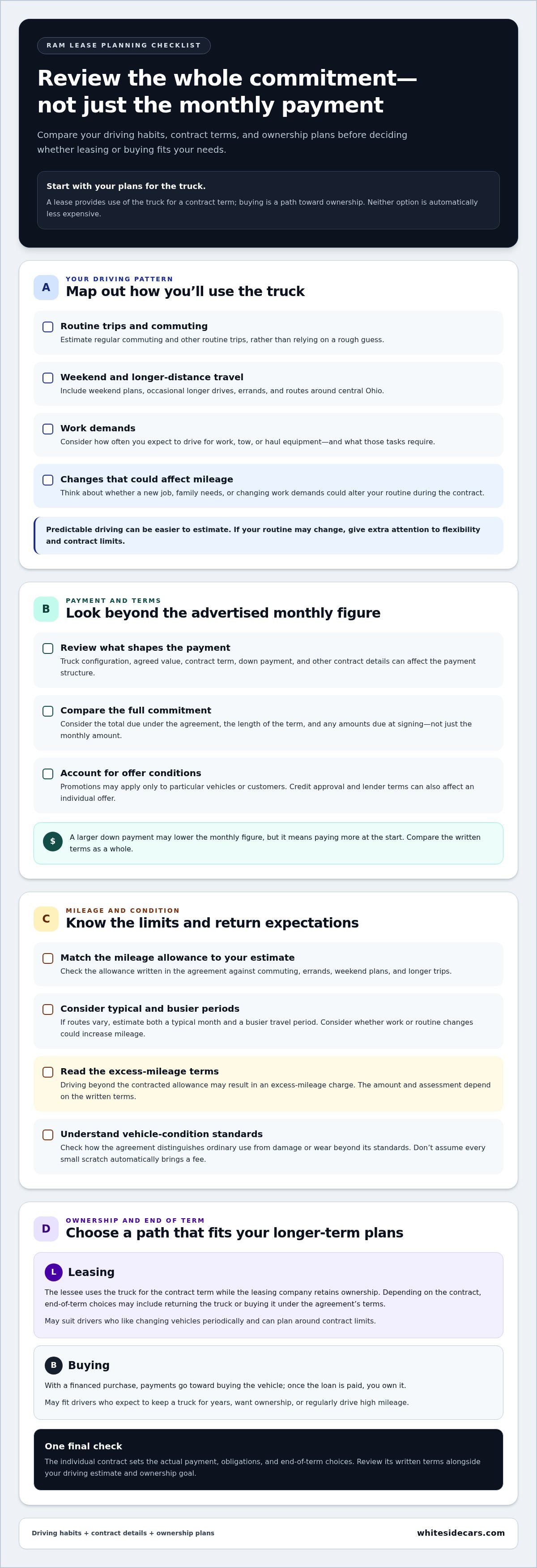
Use This Checklist to Evaluate a RAM Lease for Your Needs
A careful review starts with your routine, not a payment estimate. Use this checklist to organize what you need from a truck and compare those needs with the written agreement. It can also help you bring practical questions, rather than guesswork, to a dealership conversation.
How to match a lease to your driving routine
Estimate annual mileage from recent driving patterns, then account for changes you expect during the contract term. Include commuting, weekend trips, longer drives around central Ohio, and work travel. Consider whether towing, hauling, or regular jobsite visits affect the truck you need and the mileage or condition requirements you can comfortably manage.
- Map your regular driving. List the trips you make in a typical week, including commuting, errands, weekend plans, and longer journeys. Use recent driving records or odometer readings to build a realistic annual mileage estimate instead of relying on memory alone.
- Account for work use. Note how often you expect to tow, haul, or travel to job sites. Consider whether these tasks are occasional or part of your everyday routine, and whether your truck needs may shift during the lease term.
- Compare the term with your plans. Ask yourself how long you expect to use the truck. A contract term may fit a defined period of predictable needs, while someone planning to keep a vehicle for years may want to compare purchasing as well.
- Build a complete budget. Look beyond the monthly payment. Review amounts due at signing and documented obligations across the full term, then compare them with the costs and loan terms of buying.
- Separate trade or sale proceeds. If you may sell or trade your current vehicle, list that separately in your budget. Its value can affect your overall shopping plans, but don’t assume a particular amount or treat proceeds as a guaranteed lease benefit.
What to review in the written lease offer
Read the documented term, mileage allowance, payment schedule, vehicle-condition rules, and end-of-lease provisions together. These details explain what you pay during the agreement and what responsibilities may apply at return. If contract wording is unfamiliar, ask the finance team to explain it in straightforward terms before deciding.
- Match the allowance to your estimate. Compare your expected annual driving with the written mileage limit and consider whether likely changes to your routine could push you beyond it.
- Understand condition expectations. Read how the agreement defines acceptable vehicle condition and what process applies if the truck has wear or damage.
- Review end-of-term choices. Make sure you understand the options and responsibilities described in the contract instead of relying on assumptions about what happens next.
- Use written figures for comparison. Compare complete documented terms, not an informal estimate or a monthly figure viewed on its own.
Bring your mileage estimate, intended truck use, and questions to Tom Whiteside Chrysler Dodge Jeep Ram’s finance team. To discuss personalized options, explore RAM lease and loan options with the team.
Explore RAM Lease Options with Tom Whiteside in Mount Sterling
You’ve considered how you drive, what you need your truck to do, and whether leasing or buying better suits your plans. Bring those notes to Tom Whiteside Chrysler Dodge Jeep Ram in Mount Sterling, where the finance team offers personalized lease and loan options. A clear picture of your routine makes it easier to discuss mileage, truck use, and the terms that matter to you.
Shoppers from central Ohio communities can use the same approach. If you’re coming from Columbus, Grove City, Dublin, Groveport, Hilliard, Canal Winchester, Ashville, Orient, Circleville, Chillicothe, London, Washington Court House, or Delaware, think about your usual routes, work travel, and weekend plans before visiting. Specific expectations can make a conversation about a RAM lease more productive.
What to bring to a RAM lease conversation
You don’t need every detail finalized before you start exploring. A realistic estimate of annual mileage, your preferred contract length, and a description of how you’ll use the truck can help frame the discussion. Include regular commuting and personal driving, as well as work-related towing, hauling, or jobsite travel if those are part of your routine.
- Driving estimate: Note typical annual mileage and any likely changes during the term.
- Truck use: Describe personal, work, towing, or hauling needs that may shape your choice.
- Timing: Consider how long you’d like to use the truck and whether a defined contract term suits that plan.
- Questions: Write down what you want clarified about mileage limits, vehicle-condition responsibilities, and end-of-lease choices.
If you’re considering trading or selling your current vehicle, bring relevant details about it to the conversation. Tom Whiteside offers the KBB Instant Cash Offer for customers selling or trading a vehicle. Treat any potential proceeds as a separate part of your budget rather than assuming they’ll provide a particular amount or change the lease terms.
How the dealership can help you take the next step
The finance team can walk through personalized lease and loan options so you can compare their terms with your needs. Bring up anything that feels unclear, whether it’s how the payment schedule is structured or what the agreement says about returning the truck. Focus on understanding the documented terms and how they relate to your driving plans, rather than making a decision based on a monthly figure alone.
You can also explore RAM inventory as you narrow down what type of truck fits your intended use. Your preferred configuration and day-to-day needs can guide the conversation, while the finance team discusses the available paths for leasing or buying.
Whether you’re nearby in Mount Sterling or visiting from the Columbus area, explore current RAM inventory and discuss your plans with the team. Bring your mileage estimate and priorities, then compare the options against your budget and intended use.
Take Your Next Step with Confidence
Your best choice is the one that fits both your plans today and how you expect to use a truck over time. Before moving forward, consider which questions still need clear answers and which trade-offs you’re comfortable with. A thoughtful conversation can turn your notes about driving, work, and ownership into a practical comparison.
If a ram lease is on your shortlist, use your expected mileage and preferred truck use to guide the discussion. You can also compare a lease with a loan option, taking time to understand the written terms before deciding. Choose a direction once the details make sense for your needs and budget.
Tom Whiteside Chrysler Dodge Jeep Ram offers new RAM trucks and personalized lease and loan options. Explore RAM trucks and discuss lease options with our team. Bring your driving priorities and take the next step toward a truck that fits your plans.
Frequently Asked Questions
Is leasing a RAM truck a good idea?
A RAM lease can be a good fit if the contract’s mileage and condition requirements align with your plans, but it isn’t right for every driver. Consider how long you want to use the truck and whether you prefer a defined term over working toward ownership. Shoppers from Columbus, Grove City, Dublin, Groveport, Hilliard, Canal Winchester, Ashville, Orient, Circleville, Chillicothe, London, Washington Court House, and Delaware can compare those priorities with options at Tom Whiteside in Mount Sterling.
Can you lease a RAM truck for business use?
Business use depends on the specific lease agreement and lender terms, so describe how you’ll use the truck when discussing options. For example, explain whether it will mainly serve for commuting to a workplace, carrying tools, or traveling between job sites. The finance team can walk through relevant contract conditions. If you’re also weighing accounting or tax treatment, seek guidance from a qualified tax professional for your business circumstances.
How many miles can you drive on a RAM lease?
The mileage limit is set by the individual lease, so there isn’t one universal allowance for every RAM truck or driver. Check the written agreement for its annual or total limit and how additional miles are handled. To estimate your needs, compare odometer readings over recent months and account for seasonal work, regular routes, and upcoming commute changes. A realistic estimate helps you judge whether the contract fits your routine.
What happens when a RAM lease ends?
Your next steps are governed by the contract. It may give you the choice to return the truck or purchase it under stated terms, and it explains what happens with mileage, vehicle condition, and any remaining obligations. Before the end date, review the agreement so you know what actions and deadlines apply. If you’re considering keeping the truck, compare the purchase terms with your plans rather than assuming a buyout is automatically the best choice.
Is it better to lease or buy a RAM 1500?
Neither choice is universally better. Leasing may suit a driver whose needs fit a set contract period, while buying may appeal if you expect to keep a RAM 1500 for an extended time or drive without a lease mileage limit. Compare the complete lease and purchase commitments over the time you expect to use the truck. Include your work needs and plans for the vehicle after payments or the lease term end.
Can I trade in my current vehicle when leasing a RAM?
You can include a current vehicle in the shopping conversation, whether you’re considering a trade or a sale. Tom Whiteside Chrysler Dodge Jeep Ram offers the KBB Instant Cash Offer for customers selling or trading a vehicle. Treat any potential proceeds as a separate budget item until you know the offer details. Don’t assume the vehicle’s value will cover a particular lease amount or guarantee a specific payment outcome.
What should I check before signing a RAM lease?
Read the complete written agreement before signing, not just the payment summary. Check the contract term, mileage limit, payment schedule, vehicle-condition requirements, and end-of-lease choices. Make sure figures and terms discussed during shopping appear clearly in the paperwork, and pause over language you don’t understand. Ask the finance team to explain it in plain terms, then compare the obligations with your expected driving and budget before deciding.


